

Key takeaways
- A PIM is the single place where product data is collected, cleaned, enriched and published to every sales channel.
- An ERP runs stock, orders and finance. A PIM runs the content that describes and sells the product. Most growing B2B businesses need both.
- You likely need a PIM when the same product data is maintained in more than one spreadsheet, supplier updates take days to flow through, or channels show different information for the same item.
- The biggest wins come from automation: validation, pricing rules and publishing that run without someone copying data by hand.
Product information management, usually shortened to PIM, is software that gives a business one trusted source for everything it knows about its products. Titles, descriptions, specifications, options, images, pricing logic and category placement all live in one place, and every website, marketplace and sales tool reads from it.
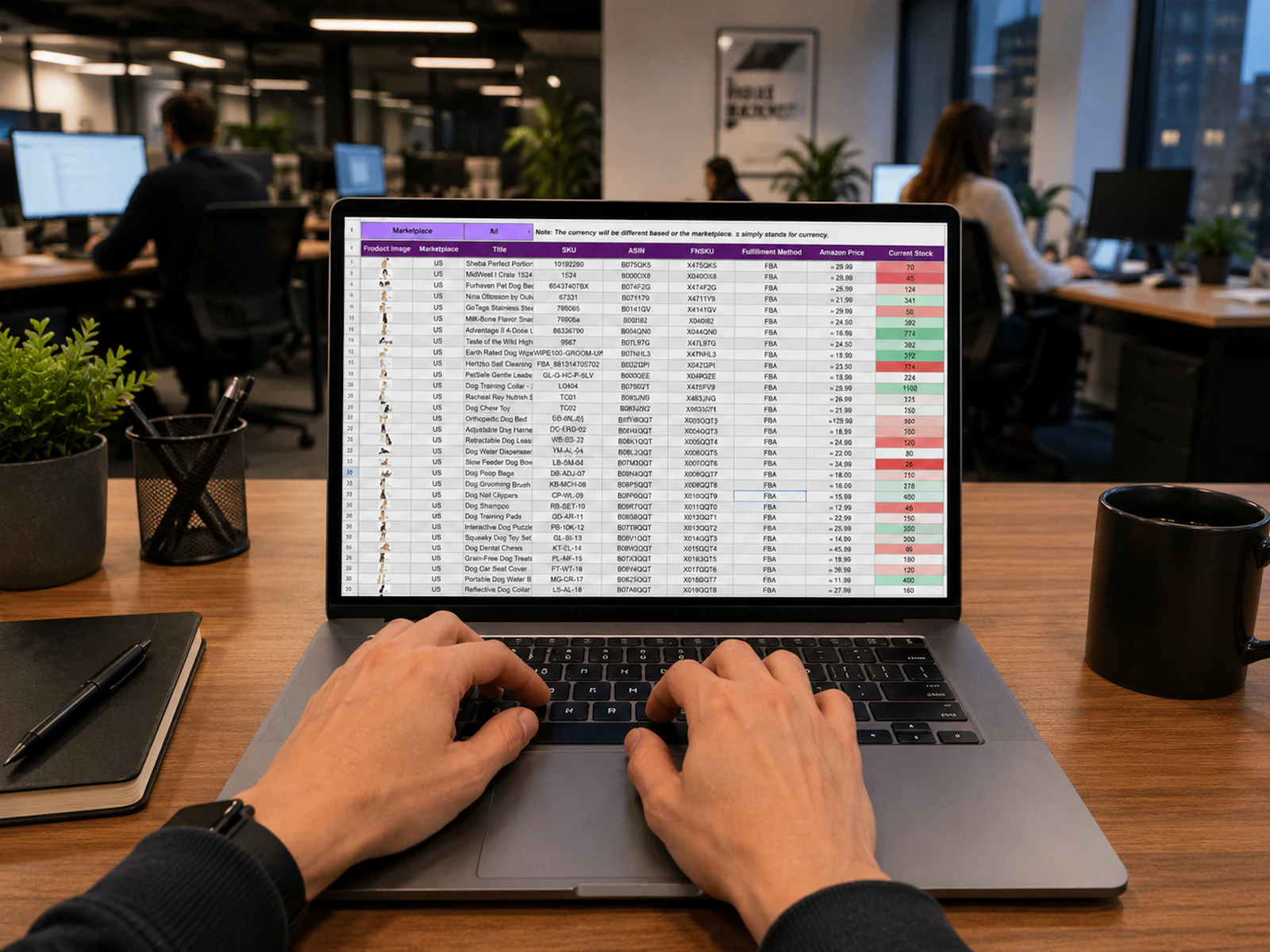
For a B2B business with a few hundred simple products, a spreadsheet can carry that load. Once the catalogue reaches thousands of SKUs, multiple suppliers and more than one sales channel, the spreadsheet stops being a tool and becomes the bottleneck. That is the gap a PIM fills.
What a PIM actually does
A PIM sits between where product data comes from and where it needs to go. Its job breaks down into five stages.
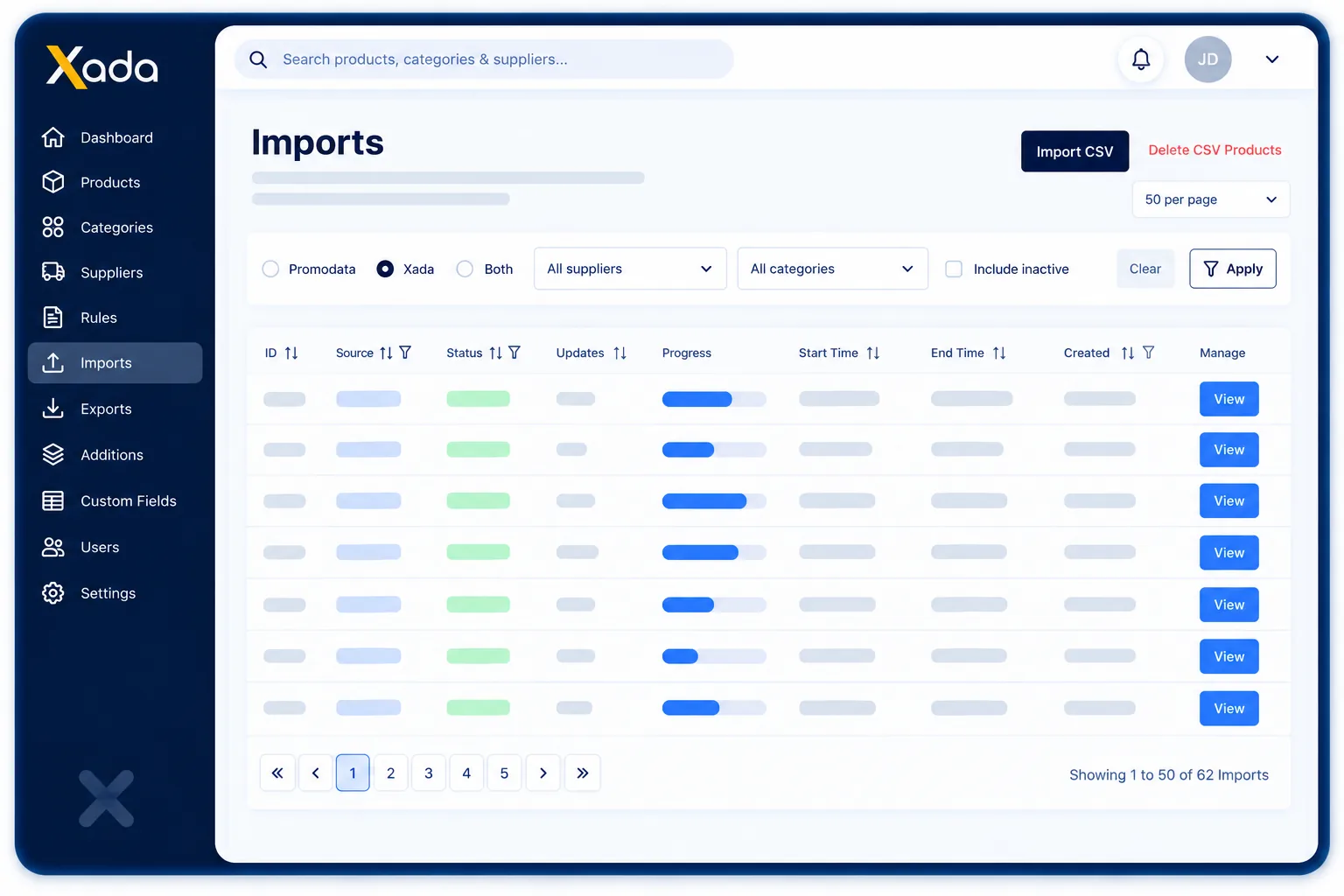
- Import. Pull product data in from supplier spreadsheets, CSV files, feeds and APIs, then map each supplier's fields onto your own structure.
- Validate. Check every record for missing fields, broken formats and conflicting values before anything reaches a customer.
- Enrich. Add the content that sells: clear descriptions, attributes for filtering, images, documents and related products.
- Organise and price. Place products in the right categories, manage options and variants, and apply pricing rules consistently.
- Publish. Send accurate, channel-ready data to your storefronts, ERP, CRM and marketplaces, and keep them in sync when anything changes.
PIM vs ERP: what's the difference?
This is the most common question we hear. Both systems hold product records, so it is easy to assume one can do the other's job. In practice they answer different questions.
| ERP | PIM | |
|---|---|---|
| Main question | How many do we have, what did it cost, who ordered it? | What is this product and how do we describe and sell it? |
| Typical data | Stock levels, cost price, orders, invoices, suppliers | Descriptions, attributes, options, images, categories, channel content |
| Main users | Finance, purchasing, warehouse | eCommerce, marketing, product and catalogue teams |
| Change frequency | Transactional, all day | Content updates, supplier refreshes, seasonal changes |
| Output | Financial and operational reporting | Accurate product pages on every channel |
The two work best together. The ERP stays the source of truth for stock and cost, the PIM stays the source of truth for product content, and an integration keeps them talking. Trying to run rich product content out of an ERP usually ends with descriptions stored in notes fields and images living on someone's desktop.
Why B2B catalogues are harder than B2C
B2C retailers worry about product content too, but B2B catalogues carry extra weight that makes a PIM more valuable, not less.
- Supplier volume. Distributors often carry ranges from dozens of suppliers, each sending data in a different format on a different schedule.
- Technical depth. Buyers need dimensions, materials, compliance details, pack sizes and compatibility before they will order.
- Complex options. Decoration methods, colours, sizes and service add-ons multiply into thousands of valid combinations.
- Customer-specific pricing. Trade accounts, quantity breaks and contract pricing all need to be applied without errors.
- More channels. A B2B storefront, a customer portal, printed catalogues and sales reps' quoting tools all need the same answers.
Signs your business needs a PIM
Few businesses decide to buy a PIM on a quiet afternoon. Usually a handful of problems pile up until the cost of doing nothing becomes obvious. If several of these sound familiar, it is time to look seriously.
- The same product is maintained in more than one spreadsheet, and nobody is sure which is current.
- A supplier price change takes days to reach your website, or never reaches it at all.
- Your website, ERP and sales team quote different details for the same SKU.
- Launching a new range means weeks of copying and pasting before it can go live.
- Customers ask questions your product pages should already answer.
- One or two people hold all the catalogue knowledge, and everything stops when they are away.
What to look for in a B2B PIM
Feature lists all start to look the same, so focus on the jobs your team does every week.
- Flexible imports that handle messy supplier files without a developer for every new format.
- Validation you can configure, so incomplete products are caught before they publish.
- Rules-based automation for pricing, categorisation and bulk updates.
- Strong options and variants support, including parent-child options and option-level pricing.
- Native integrations with the platforms you already run, such as BigCommerce, Unleashed or Promodata.
- A team that understands your industry, because setup and data mapping matter as much as software.
Xada was built specifically for complex B2B catalogues, from promotional products to industrial spare parts. If you want to see how it handles your data, explore the features or book a demo with the team.
Frequently asked questions
What does PIM stand for?
PIM stands for product information management. It refers to both the practice of managing product data centrally and the software used to do it.
Is a PIM the same as an ERP?
No. An ERP manages transactional data such as stock, orders, costs and invoices. A PIM manages the descriptive content used to sell products, such as descriptions, attributes, options, images and categories. Most growing B2B businesses use both, connected by an integration.
How many products do you need before a PIM is worth it?
There is no fixed number. Complexity matters more than count. A business with 2,000 products, many suppliers and three sales channels usually benefits more than one with 20,000 simple products and a single website.
Can a PIM work with BigCommerce?
Yes. Xada includes a native BigCommerce integration that publishes products, options, pricing and images to your store and keeps them in sync as data changes.